Mid-Segment Housing Demand in Mumbai | Growth Engine 2025

By
Shrusti Naik
Posted on December 17, 2025. 10 mins
Introduction

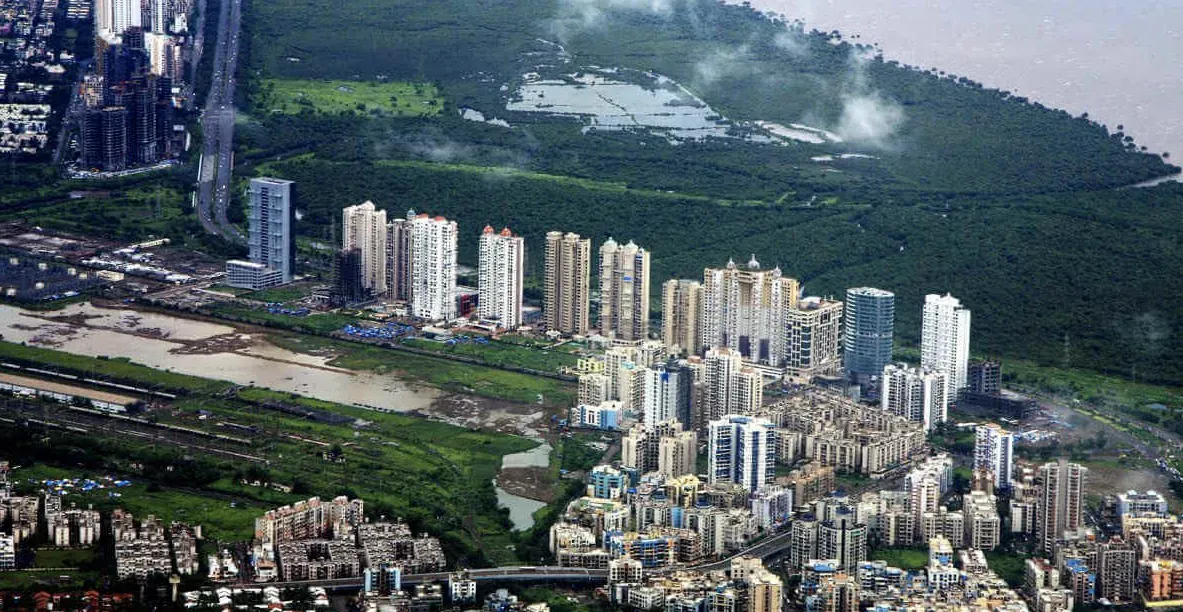
Mumbai’s real estate landscape is often cast in terms of luxury seafront apartments and ultra-premium sales. Yet beneath the headlines lies a robust mid-segment housing market powering the city’s broader residential demand. As Mumbai evolves in 2025, this middle tier — homes priced approximately between ₹1 crore to ₹3 crore — has emerged as a backbone of buyer traction, driving registrations, supporting developers’ launches, and enhancing affordability for salaried professionals and upwardly mobile families.
In this blog, we explore why mid-segment housing demand in Mumbai is increasing, the numerical strength behind the trend, how it compares with other segments, and what it means for buyers, investors, and policymakers.
Key Stats: Mid-Segment Housing Demand (2025)
| Indicator | Data/Finding |
|---|---|
| Share of mid-segment launches (housing stock) | ~65–70 % of total new launches in 2025 (Cushman & Wakefield Assets) |
| Mumbai housing registrations Nov 2025 | 12,283 units, second-highest ever (The Economic Times) |
| Registrations value Nov 2025 | ₹174 bn (~₹17,400 cr) with mid-segment drivers (The Economic Times) |
| Share of ₹1–2 cr price bracket | Increased from 31% (2024) to 33% (2025) (Keystone Real Estate Advisory) |
| Homes below ₹1 cr share (Oct 2025 registrations) | ~48 % with strong compact unit demand (RP Realty Plus) |
| Mumbai average price (2025) | ~₹26,975 per sq. ft. (SOBHA Limited) |
Mid-segment housing demand is clearly not fringe — it is forming a major chunk of total residential appetite in 2025, driven by affordability pressures, stable employment income, and evolving buyer preferences. Also read Affordable 1 BHK Flats in Mumbai Under ₹70 Lakh - Best Areas to Look (2025)
What Does “Mid-Segment” Mean in Mumbai?
In Mumbai’s housing context:
- Mid-segment properties are generally homes priced between ₹1 cr and ₹3 cr.
- Unit sizes often range from 2BHK to smaller 3BHK layouts, typically between 700–1,200 sq. ft..
- These homes appeal to first-time homebuyers, nuclear families, and middle-income professionals seeking homeownership without premium pricing.
This segment sits between affordable (<₹1 cr) and premium/luxury (>₹3 cr) brackets — and its growth indicates a new equilibrium for demand amidst market shifts.
Why Mid-Segment Demand Is Rising
1.
Despite broader inflation and rising construction costs, the mid-segment remains relatively affordable compared to premium luxury inventory. Homes under ₹3 crore align better with household incomes in Mumbai and adjoining regions, making them natural choices for long-term ownership.
In October 2025, nearly 48 % of registered homes were priced below ₹1 crore — largely in the compact and mid tier — underscoring real affordability-led demand. (RP Realty Plus)
2.
Growth in mid-segment housing isn’t incidental — it is structural:
- In Q2 2025, nearly 70 % of all new launches in Mumbai were mid-segment units — a dominant share over luxury and affordable stock. (Cushman & Wakefield Assets)
- In Q3 2025, mid-segment launches were ~65 % of total launches, outstripping both luxury and affordable segments. (Cushman & Wakefield Assets)
Developers increasingly orient their portfolios to mid-segment stock because it balances demand with profitability, particularly as land costs remain high and luxury absorption volatility rises. Also check out 2025 Outlook: Residential Property Prices in Mumbai’s Western Suburbs
3.
Mumbai recorded its second-highest number of housing registrations in November 2025, with 12,283 units registered — driven substantially by mid-to-premium demand. (The Economic Times)
In value terms, registrations were approximately ₹174 billion (₹17,400 crore) — demonstrating robust buyer participation even amid affordability concerns. (The Economic Times)
This velocity of transactions, often concentrated in mid-priced segments, signals sustained end-user demand rather than speculative buying alone. Read Best Localities in Mumbai for Buying a Home Under ₹2 Crore
Demand vs Supply: Where Equilibrium Is Shifting
Registration & Launch Trends
| Metric | Ins 2025 Data |
|---|---|
| Mid-segment share of new launches | ~65–70 % (Cushman & Wakefield Assets) |
| Total housing registrations (Nov 2025) | 12,283 units (The Economic Times) |
| Share of ₹1–2 cr properties | Increased from 31 % → 33 % (Keystone Real Estate Advisory) |
| Units under 500–1,000 sq. ft | ~85 % of total (compact preference) (RP Realty Plus) |
What this data tells us:
- While luxury and premium housing attract headlines, the mid-segment continues to underpin Mumbai’s residential market fundamentals.
- Smaller homes (500–1,000 sq. ft) remain popular, as buyers balance size with affordability. (RP Realty Plus)
- Rising share of ₹1–2 crore properties indicates that builders are responding to market signals by allocating supply accordingly. (Keystone Real Estate Advisory)
This alignment of supply and demand has reinforced confidence among mid-income buyers and helped sustain registration momentum.
Micro-Market Drivers: Where Mid-Segment Demand Is Strong
1.
Mid-segment housing demand is particularly strong in suburban nodes such as:
- Thane and Kalyan-Dombivli Region – strong infrastructure backed by expanding metro and suburban rail, attractive pricing relative to central Mumbai. (Wikipedia)
- Navi Mumbai Submarkets (e.g., Panvel, Kharghar) – rising due to connectivity improvements and expanded office/educational hubs. (Cushman & Wakefield Assets)
- Extended Western Suburbs (Andheri, Malad) – proximity to employment centres with relatively better value than core city.
These zones offer mid-priced units with better lifestyles and connectivity compared to older downtown clusters, attracting both homebuyers and investors.
2.
Significant infrastructure projects are reinforcing mid-segment demand by improving accessibility:
- Mumbai Metro Lines (including expansions like the Aqua Line) enhance connectivity across suburbs, making mid-priced housing more attractive for commuters. (Wikipedia)
- Enhanced suburban rail corridors (e.g., Panvel-Karjat Corridor) promise shorter travel times and more affordable living options beyond core Mumbai. (Wikipedia)
Better transit connectivity increases the catchment area for mid-segment buyers and supports price growth potential. Also check out Best Localities in Mumbai for Buying a Home Under ₹5 Crore
What This Means for Buyers and Investors
1. Greater Affordability Without Compromising on Location
Mid-segment homes allow buyers to remain closer to employment hubs while paying significantly less than premium segment prices. This is especially true in suburbs and well-connected nodes, where price per sq. ft. is meaningfully lower but commuting options are improving.
2. Higher Absorption & Liquidity
The strength of registrations indicates that mid-segment units sell faster, reducing holding costs for investors and providing quicker exits versus luxury properties, which are more niche.
3. Balance Between Rental Yield & Capital Growth
Mid-priced units typically generate higher rental yields (relative to purchase price) compared to luxury homes, with sustainable demand from working professionals and families — an attractive balance for buy-to-let investors.
4. Policy & Regulatory Tailwinds
Initiatives like the Revised Occupancy Certificate (OC) Scheme in Mumbai, expected to regularize thousands of buildings and reduce compliance costs for owners, enhance the attractiveness of mid-segment housing stock. (The Times of India)
Moreover, a robust RERA pipeline with Maharashtra as the leading state for registered residential projects supports organized housing development that benefits mid-segment growth. (The Times of India)
Challenges & Considerations
1. Affordability Pressure
Even as mid-segment demand remains strong, rising construction costs and mortgage rates can strain affordability, especially for younger buyers. Sustained income growth and competitive home loan products are vital to maintain this demand engine.
2. Supply Concentration Shift
Some reports indicate that developers are increasingly focusing on properties above ₹1.5 crore, potentially missing demand for sub-₹1.5 crore mid units. (img.staticmb.com) Ensuring supply aligns with actual demand segments remains important.
Conclusion
In 2025, mid-segment housing demand in Mumbai is a critical growth engine, driving registrations, supporting developer launch strategies, and broadening homeownership opportunities. Backed by strong suburban demand, expanding infrastructure, and reasonable pricing dynamics, this segment continues to anchor the city’s residential market in ways that are not always visible in luxury headline figures.
For buyers, investors, and policymakers, the mid-segment narrative underscores that Mumbai’s real estate revival is inclusive and demand-driven, especially for households balancing location preference with affordability and lifestyle aspirations.
❓ Frequently Asked Questions (FAQs)
1. What defines mid-segment housing in Mumbai? Mid-segment typically refers to homes priced between ₹1 crore and ₹3 crore, balancing affordability and location value.
2. Is demand for mid-segment homes stronger than luxury in Mumbai 2025? Yes — mid-segment launches constitute ~65–70 % of total new units, reflecting robust demand. (Cushman & Wakefield Assets)
3. Which areas show the strongest mid-segment demand? Thane, Kalyan-Dombivli, Navi Mumbai suburbs, and extended western suburbs are key mid-segment demand hubs. (Cushman & Wakefield Assets)
4. How does infrastructure affect mid-segment housing demand? Improved transit such as Metro expansions and suburban rail corridors boosts accessibility, making mid-priced homes more desirable. (Wikipedia)
5. Will mid-segment demand continue to grow? With supportive affordability, income growth, and developer focus, mid-segment demand is poised to remain a core housing engine in 2025.
JSON-LD (FAQPage)
{
  "@context":"https://schema.org",
  "@type":"FAQPage",
  "mainEntity":[
    {"@type":"Question","name":"What defines mid-segment housing in Mumbai?","acceptedAnswer":{"@type":"Answer","text":"Mid-segment typically refers to homes priced between ₹1 crore and ₹3 crore, balancing affordability and location value."}},
    {"@type":"Question","name":"Is demand for mid-segment homes stronger than luxury in Mumbai?","acceptedAnswer":{"@type":"Answer","text":"Yes — mid-segment launches constitute about 65–70% of total new units, reflecting robust demand in 2025."}},
    {"@type":"Question","name":"Which areas show the strongest mid-segment demand?","acceptedAnswer":{"@type":"Answer","text":"Thane, Kalyan-Dombivli, Navi Mumbai suburbs, and extended western suburbs are key mid-segment demand hubs."}},
    {"@type":"Question","name":"How does infrastructure affect mid-segment housing demand?","acceptedAnswer":{"@type":"Answer","text":"Improved transit such as metro expansions and suburban rail corridors boosts accessibility, making mid-priced homes more desirable."}},
    {"@type":"Question","name":"Will mid-segment demand continue to grow?","acceptedAnswer":{"@type":"Answer","text":"With supportive affordability, income growth, and developer focus, mid-segment demand is poised to remain a core housing engine in 2025."}}
  ]
}
🧾 References
- Mumbai housing registrations hit second-highest November ever; affordability concerns deepen, ET Markets, Dec 2, 2025. (The Economic Times)
- Residential MarketBeat Q3 2025 (Cushman & Wakefield) — mid-segment ~65% share of launches. (Cushman & Wakefield Assets)
- Mumbai Residential MarketBeat Q2 2025 — mid-segment ~70% of launches. (Cushman & Wakefield Assets)
- Mumbai Housing Market Records 11,000+ Registrations in Oct 2025, Realty+, Nov 1, 2025. (RP Realty Plus)
- Mid-Segment Share Increased from 31% to 33% (2025), KeyStone Real Estate Advisory, Dec 2025. (Keystone Real Estate Advisory)
- Mumbai Property Market Analysis 2025, Sobha.com, Oct 31, 2025. (SOBHA Limited)
- Demand for smaller homes surges in September quarter, Economic Times (Magicbricks PropIndex), Oct 6, 2025. (The Economic Times)
- Revised OC Scheme to regularise buildings in Mumbai, Times of India, Dec 11, 2025. (The Times of India)
- MahaRERA sees highest number of registered projects, Times of India, May 2025. (The Times of India)
- Bandra Kurla Complex metro station & transit impact, Wikipedia, latest edit. (Wikipedia)